Battle of Haldighati: SSC CGL 2026 Notes
Maratha Kingdom
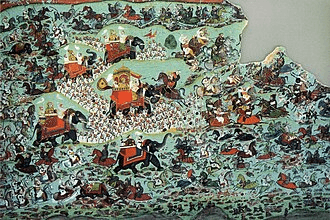
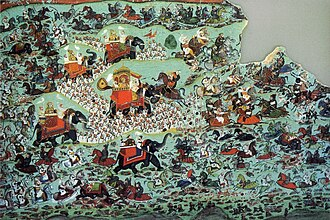
The Battle of Haldighati, fought on June 18, 1576, was one of the most significant battles in Indian history.
Battle of Haldighati: The Epic Stand of Maharana Pratap
The Battle of Haldighati, fought on June 18, 1576, remains one of the most significant military encounters in Indian history. It was not just a clash for territory, but a symbolic struggle for regional sovereignty against the expanding Mughal Empire under Emperor Akbar.
The Combatants: Imperial Might vs. Rajput Valor
The battlefield was a narrow mountain pass in the Aravalli Range near Gogunda, Rajasthan. Its yellow soil gave the location its name—Haldighati (Turmeric Valley).
- The Mughals: Led by Raja Man Singh I of Amber. Contrary to popular belief, Akbar did not personally fight in this battle. The Mughal force was a massive coalition of 5,000 to 10,000 professional soldiers.
- The Mewar Forces: Led by Maharana Pratap. His smaller force of roughly 3,000 cavalry and 400 Bhil archers (led by Punja Bhil) relied on the difficult terrain and guerrilla tactics.
Also read: Akbar’s Maktab Khana: SSC CGL Notes
The Turning Point: The Charge of Chetak
The battle was fierce and bloody. The most iconic moment occurred when Maharana Pratap, mounted on his legendary horse Chetak, charged directly at Raja Man Singh’s war elephant. Pratap hurled his spear at Man Singh, who narrowly escaped by ducking into his howdah.
In the ensuing chaos, Chetak was severely wounded. Realizing the danger, Pratap’s commanders, particularly Jhala Maan, urged the Rana to retreat to safety while they held the line. Chetak famously carried Pratap across a stream to safety before collapsing and passing away.
The Outcome: A Tactical Stalemate?
Technically, the Mughals won the battle of haldighati as the Mewar forces retreated. However, they failed to capture Maharana Pratap or dismantle the spirit of Mewar.
- Mughal Victory: They took control of the pass and surrounding forts.
- Mewar Resilience: Pratap retreated into the hills, initiating a decades-long guerrilla war that eventually allowed him to reclaim most of his lost territories (except Chittor).
Historical Significance
Haldighati is celebrated today as a testament to the unyielding spirit of independence. For students of history and competitive exams like SSC and UPSC, it serves as a masterclass in how terrain can level the playing field between unequal armies.
Military Strategy in the Battle of Haldighati
| Feature | Mughal Army (Raja Man Singh) | Mewar Army (Maharana Pratap) |
| Core Strength | Numerical superiority and heavy cavalry. | Local knowledge and guerrilla expertise. |
| Primary Tactic | Traditional Array: Frontal assault supported by a strong rearguard. | Frontal Charge & Ambush: High-intensity initial strike to break the Mughal lines. |
| Infantry | Professional musketeers and heavy foot soldiers. | Bhil Archers: Tribal warriors using height and cover to rain arrows from the cliffs. |
| Key Asset | War Elephants: Used as mobile fortresses and to break enemy formations. | Mobility: Light cavalry capable of navigating rocky, narrow terrain quickly. |
| Objective | Total conquest and the capture of Maharana Pratap. | Preservation of sovereignty and exhausting the enemy through attrition. |
Tactical Analysis: Why the Battle Ended in a Stalemate?
Despite the Mughal victory on the battle of haldighati, the campaign failed its primary political objective:
The submission of Mewar
1. The Terrain Trap: The “Haldighati” pass was so narrow that the Mughals could not deploy their full numerical strength. This allowed Pratap’s smaller force to fight them on almost equal terms for the first few hours.
2. Psychological Warfare: The Rajputs fought with a “do or die” (Saka) mentality. The Mughal forces, particularly the Rajputs fighting under Man Singh, were often hesitant to engage in a total massacre of their own kin, leading to a tactical lull that allowed Pratap to escape.
3. Supply Line Sabotage: Following the battle, the Bhil tribesmen constantly harassed Mughal supply lines, making it impossible for Man Singh to maintain a permanent garrison in the hills.
Tagged with

Written by Abhay Raj Patel
Passionate writer sharing thoughts on life, technology, and everything in between.